Bid/No-Bid Assessment Guide: Make the Tender Decision You Can Defend
The bid/no-bid decision is not just a speed problem.
For an Australian business bidding on government work, the real question is not how fast you can decide. It is whether the decision will still make sense after the team has read the requirements, checked the evidence, priced the work and understood the contract risk.
A fast yes can waste a week.
A fast no can walk away from work you could have won.
The useful decision is the one your bid team can defend.
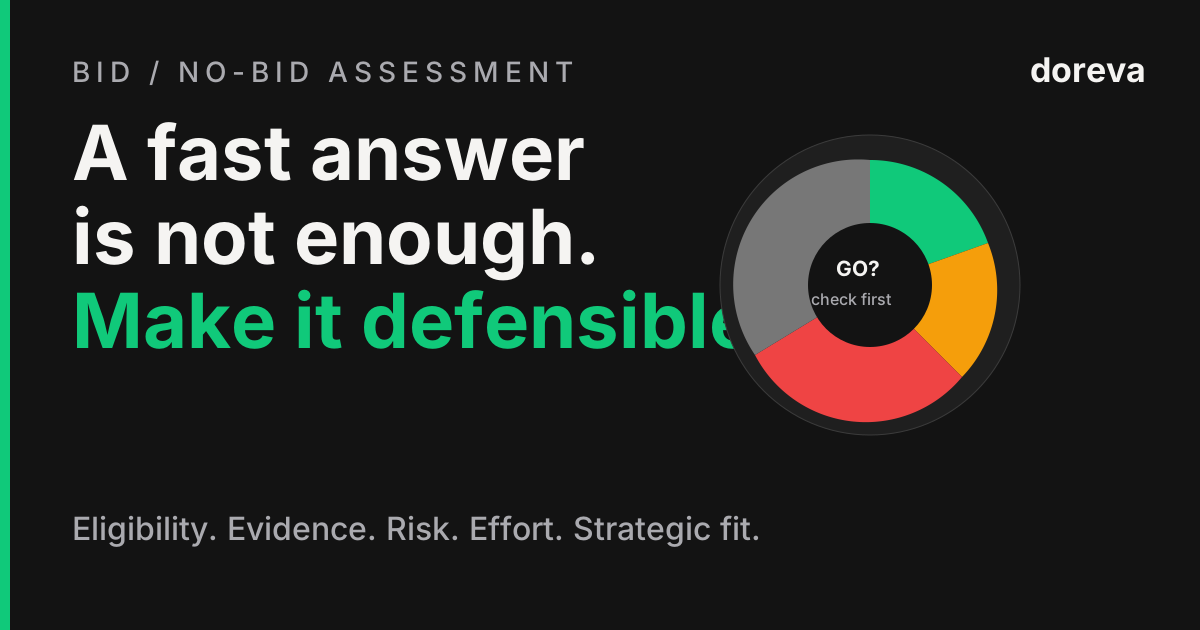
A good bid/no-bid call checks eligibility, evidence, risk, effort and strategic fit before the team starts writing.
The short answer
A bid/no-bid assessment decides whether a tender is worth pursuing before the bid team commits serious time. For government tenders, it should check five things: can you participate, can you meet the mandatory requirements, can you evidence the evaluation criteria, can you price the risk, and is the opportunity worth the effort.
The score matters less than the reasons behind it.
Why bid/no-bid decisions matter
Small bid teams do not have unlimited tendering hours. Every response you chase pulls time from delivery, sales, pricing, operations and the next opportunity.
That is why the bid/no-bid decision is one of the highest-value calls a team makes.
Get it right and you focus on work you can win and deliver.
Get it wrong and two bad things can happen. You spend days writing a response that was never going to pass the gateway check. Or you win a contract with obligations, pricing pressure or delivery risk the team did not fully understand.
The second problem is usually more expensive.
The expensive mistake is not always the bid you lose
Most teams remember the tenders they lost after a long week of writing.
The quieter risk is the tender they should never have chased. The one with a condition for participation nobody checked early. The one where the insurance requirement sat below your cover. The one where the evaluation criterion asked for three similar government projects and the evidence library had only one.
Then there is the tender you win.
If the draft contract includes obligations you cannot comfortably carry, the cost does not show up at submission. It shows up after award, when delivery owns the promise and the margin is already thin.
That is why a bid/no-bid assessment needs to expose the working. A single confident score is not enough.
What a bid/no-bid assessment should check
A useful assessment separates the decision into five parts.
Can we participate? Start with the conditions for participation. Licences, certifications, insurances, accreditations, prequalification panels, financial viability. These are pass or fail. If you cannot meet one, the decision is usually made.
Can we meet the mandatory requirements? Anything marked must, shall or mandatory needs a clear response. A strong methodology does not fix a missed mandatory requirement.
Can we evidence the scored criteria? This is where tender teams lose time. It is not enough to say you have experience. You need the project, the client, the outcome, the referee, the certificate, the policy or the number that proves the claim.
Can we price and deliver the risk? Read the Statement of Requirements and the draft contract before the team says yes. Liability, payment terms, transition obligations, service levels and reporting requirements all belong in the decision.
Is it worth the effort? Look at strategic fit, likely competition, relationship with the buyer, timetable, internal availability and whether the opportunity helps the business beyond revenue alone.
Only one of those questions is mainly about speed.
The rest are about evidence and judgement.
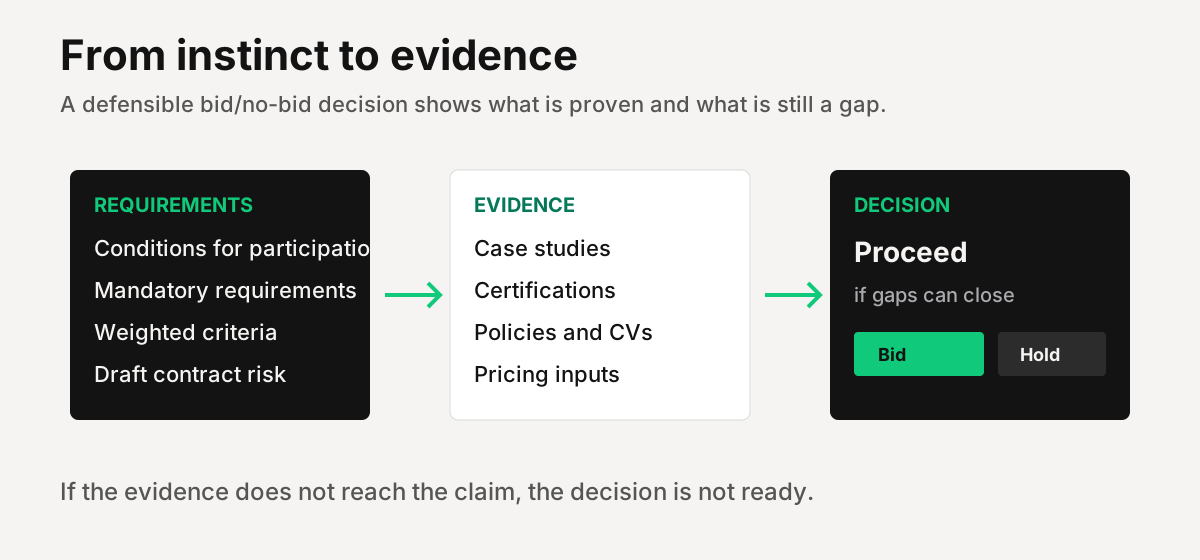
The decision becomes clearer when every requirement is mapped to real evidence, known risk or a visible gap.
Why the manual process breaks down
The traditional bid/no-bid process is slow, but slowness is not the worst part.
The worse problem is that the decision is often opaque.
The requirements sit in the RFT. The evidence sits in old proposals, folders, inboxes and delivery team memory. The pricing risk sits with one person. The contract risk sits with another. The final decision often becomes a meeting where everyone has part of the picture and nobody has all of it.
That is how teams talk themselves into weak bids.
Not because they are careless. Because the evidence was hard to see in time.
A score is useful only if you can question it
A bid/no-bid score can help, but only if the bid team can interrogate it.
The team needs to know what drove the recommendation. Which mandatory requirements are clean. Which criteria have strong evidence. Which claims are thin. Which risks need commercial review before the team writes.
That is the difference between a score and a decision.
A score says: proceed.
A decision says: proceed if we can close these two evidence gaps, confirm this insurance requirement and price the transition risk.
The second one is more useful because the bid team can act on it.
What changes when the decision is defensible
When the bid/no-bid assessment is visible, the internal conversation changes.
The team stops arguing from instinct and starts looking at the same facts. The walk-aways get cleaner because the reason is clear. The bids that proceed start stronger because evidence gaps are found before drafting, not halfway through the response.
It also protects the relationship between sales, delivery and the bid team.
The bid team is not blocking work. Delivery is not being difficult. Sales is not chasing everything. Everyone can see the same requirement map and the same evidence gaps.
That is the point of a good bid/no-bid process.
It gives the team a shared basis for judgement.
How Doreva helps with bid/no-bid assessment
Doreva is AI tender writing software built for Australian Government procurement, and the assessment described in this guide is built into it.
When a tender is loaded, Doreva reads the requirements and runs a go/no-go assessment against the material your team already trusts: conditions for participation, certifications, insurances, personnel, past projects and your evidence library. It returns a scored recommendation. Bid, conditional, or no-bid.
The score is not the point. The working is.
Each factor in the assessment shows what was found and what is missing. The critical gaps are listed by name, so the team can see whether they are closable before the deadline or whether this is a tender to let pass.
Doreva is not there to replace the bid lead. The bid lead still makes the call. Doreva puts the evidence for that call on one screen.
A five-question bid/no-bid checklist
Before the next tender meeting, ask five questions.
- What would rule us out before scoring starts?
- Which mandatory requirements are not yet proven?
- Which scored criteria have strong evidence today?
- Which contract or pricing risks need review before we commit?
- What would make this opportunity worth the team's time?
If the team cannot answer those questions clearly, it is too early to say yes.
For the Commonwealth process after you decide to proceed, read the AusTender response guide.
Make the bid/no-bid call with the evidence in front of you.
Start the free pilot with a real RFT. Doreva reads it and shows the requirements and evaluation criteria, before your team commits a fortnight to the response.
Start Free PilotBuilt and hosted in Australia. Your tender data stays here.
Source: Commonwealth Procurement Rules, Department of Finance. Procurement rules and thresholds should always be checked against the current official documents for a live opportunity.